
The Minneriya Elephant Gathering: When and How to See It
Imagine watching a family of wild elephants emerge from the trees and wander towards a vast reservoir, with tiny calves keeping close to their mothers. A little farther away, dozens more graze on fresh green grass, while the calls of birds carry across the open landscape. It is an extraordinary sight, and one of the reasons Sri Lanka is such a memorable destination for wildlife lovers.
The Minneriya elephant gathering is one of the island’s most celebrated natural spectacles. During the drier months, elephants from the surrounding forests congregate around Minneriya’s ancient reservoir, creating opportunities to see large numbers of these remarkable animals together in the wild.
If you are planning a Sri Lankan holiday around this experience, timing matters. The herds move with the seasons, and choosing the right month, safari time and base can make a real difference. Here is how to plan your visit while keeping your expectations realistic and your experience enjoyable.
What Is the Minneriya Elephant Gathering?
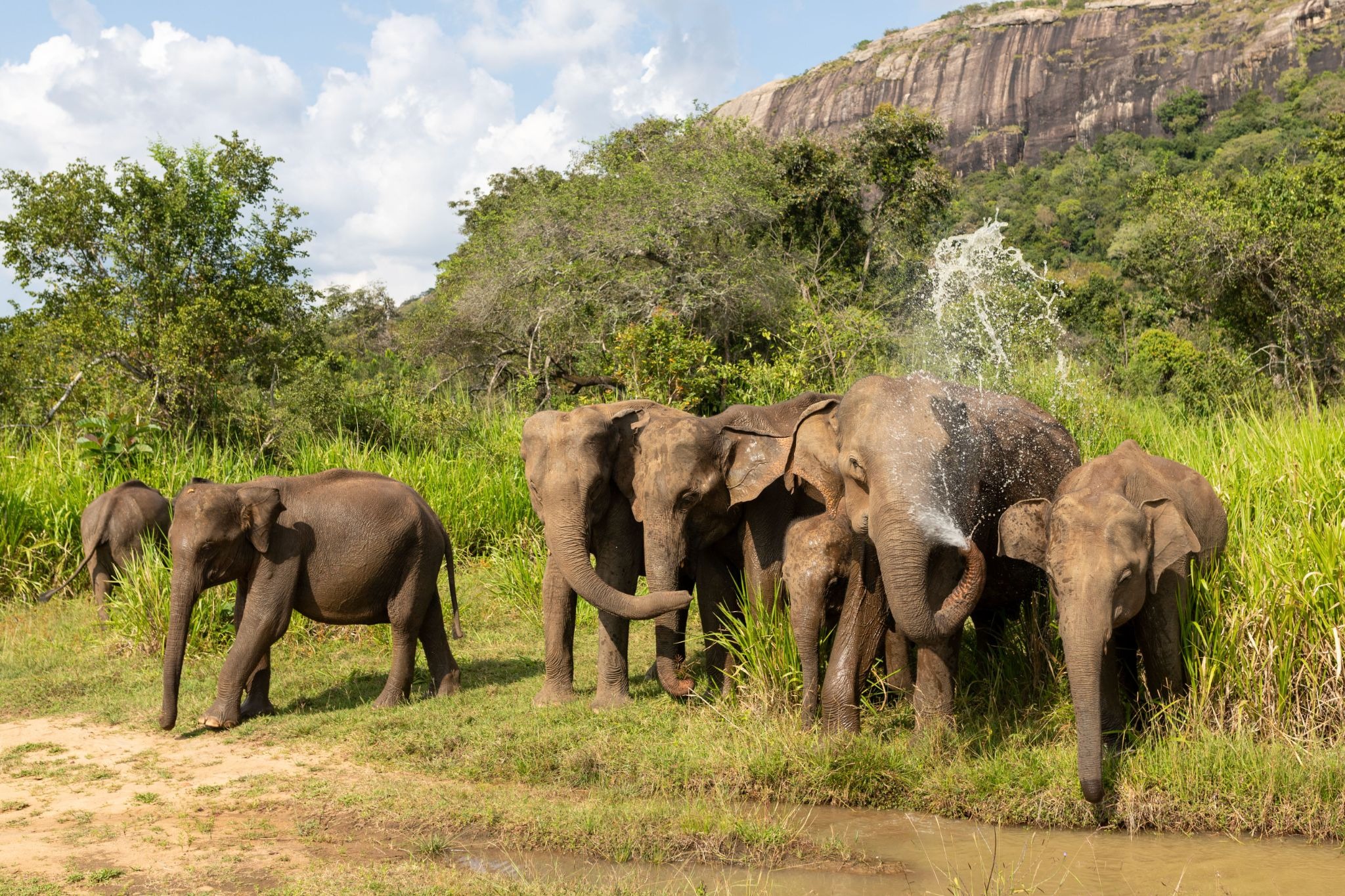
The Gathering is a seasonal congregation of wild Asian elephants around the grasslands and water of Minneriya National Park in Sri Lanka’s North Central Province. It is not a staged wildlife event or a permanent herd that remains in one place. Instead, elephants move through the wider landscape in response to changing water levels and food availability.
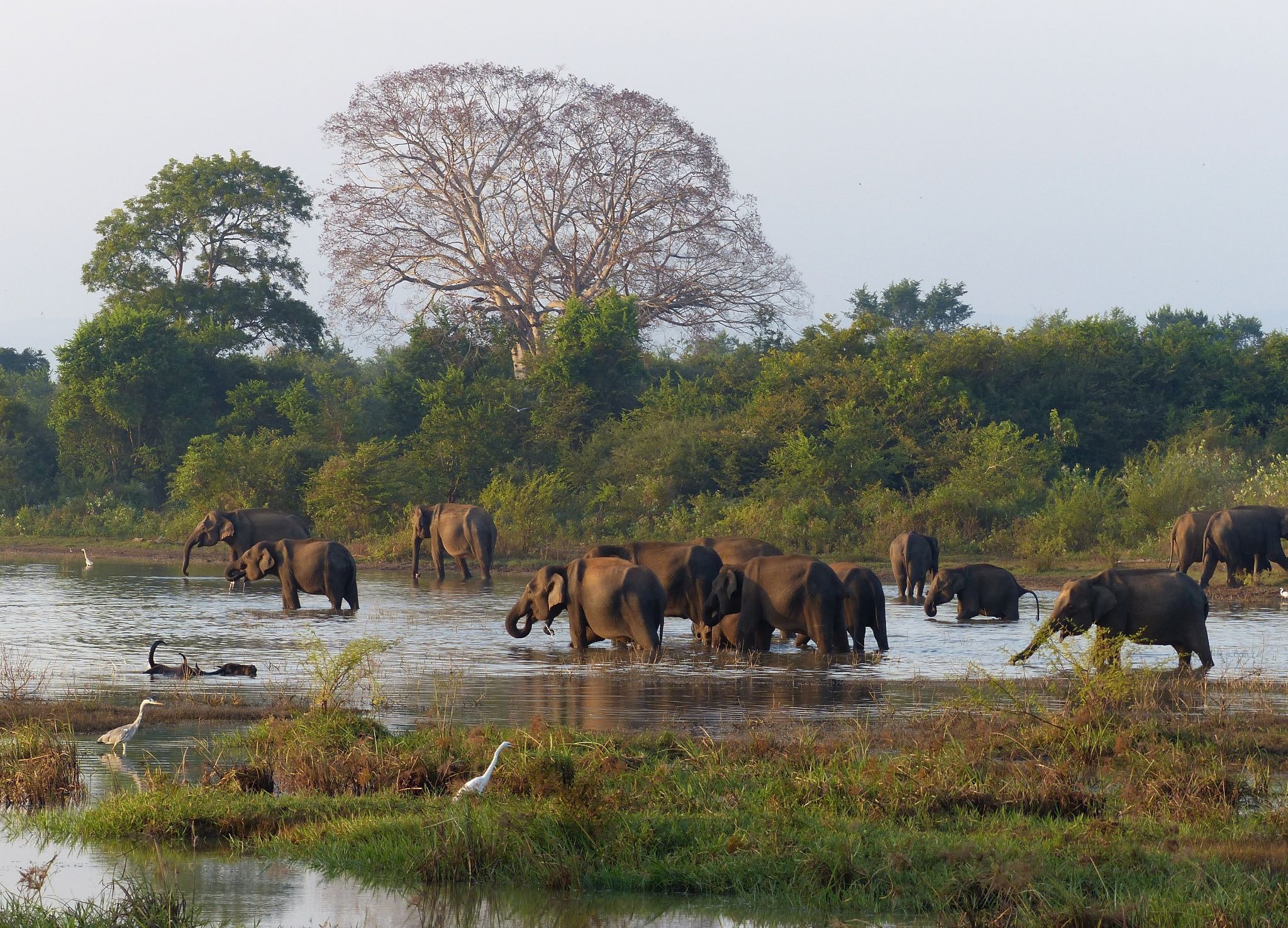
At the centre of the park lies the Minneriya reservoir, an ancient irrigation tank built during the reign of King Mahasen in the third century. As water levels fall during the dry season, exposed ground around the reservoir supports fresh grass. For elephants, this provides a valuable feeding area when food can become less abundant elsewhere.
Family groups arrive from surrounding forest habitats, sometimes gathering in impressive numbers. You may see mothers feeding beside their calves, young elephants testing their independence, and large adults moving between the groups. Watching them interact naturally is often more rewarding than simply counting how many elephants appear.
The gathering is also an important reminder that Sri Lanka’s wildlife depends on connected habitats. The elephants do not recognise the boundaries between parks; they follow familiar routes through the wider forest landscape.
When Is the Best Time for the Minneriya Elephant Gathering?
The general window for the gathering is May to October. However, the most dramatic concentrations are commonly associated with July to September, particularly August and September.
These are useful planning guidelines, not guaranteed dates. Rainfall, reservoir levels and conditions elsewhere in the region influence where elephants gather each year. Some seasons peak earlier or later than expected.
Month-by-month guide
May and June: Elephants may begin gathering around Minneriya as the dry season develops. Numbers can build gradually, so this period may suit travellers who prefer to visit before the busiest weeks.
July and August: These months are often excellent for a Minneriya National Park safari, with the dry conditions encouraging elephants to feed around the reservoir.
September: This can be another outstanding month, although some herds may start moving towards nearby parks depending on water and grass conditions.
October: The transition towards wetter weather can make elephant movements less predictable. Some herds may shift towards Kaudulla National Park.
November to April: The famous large-scale gathering is less predictable, but elephant sightings remain possible in the wider region. Hurulu Eco Park or Kaudulla may be worth considering, depending on current conditions.
For travellers coming from the UK, Australia, Germany, the Netherlands, Ireland or New Zealand, it is worth checking the timing of the safari against your entire Sri Lanka itinerary rather than choosing dates based on the gathering alone.
The practical takeaway: If seeing large Sri Lanka elephant herds is a major holiday priority, aim for July to September where possible, but stay flexible about which park you visit.
Morning or Afternoon: When Should You Go on Safari?
For the best chance of seeing large numbers of elephants around Minneriya’s reservoir, an afternoon safari is usually the stronger choice.
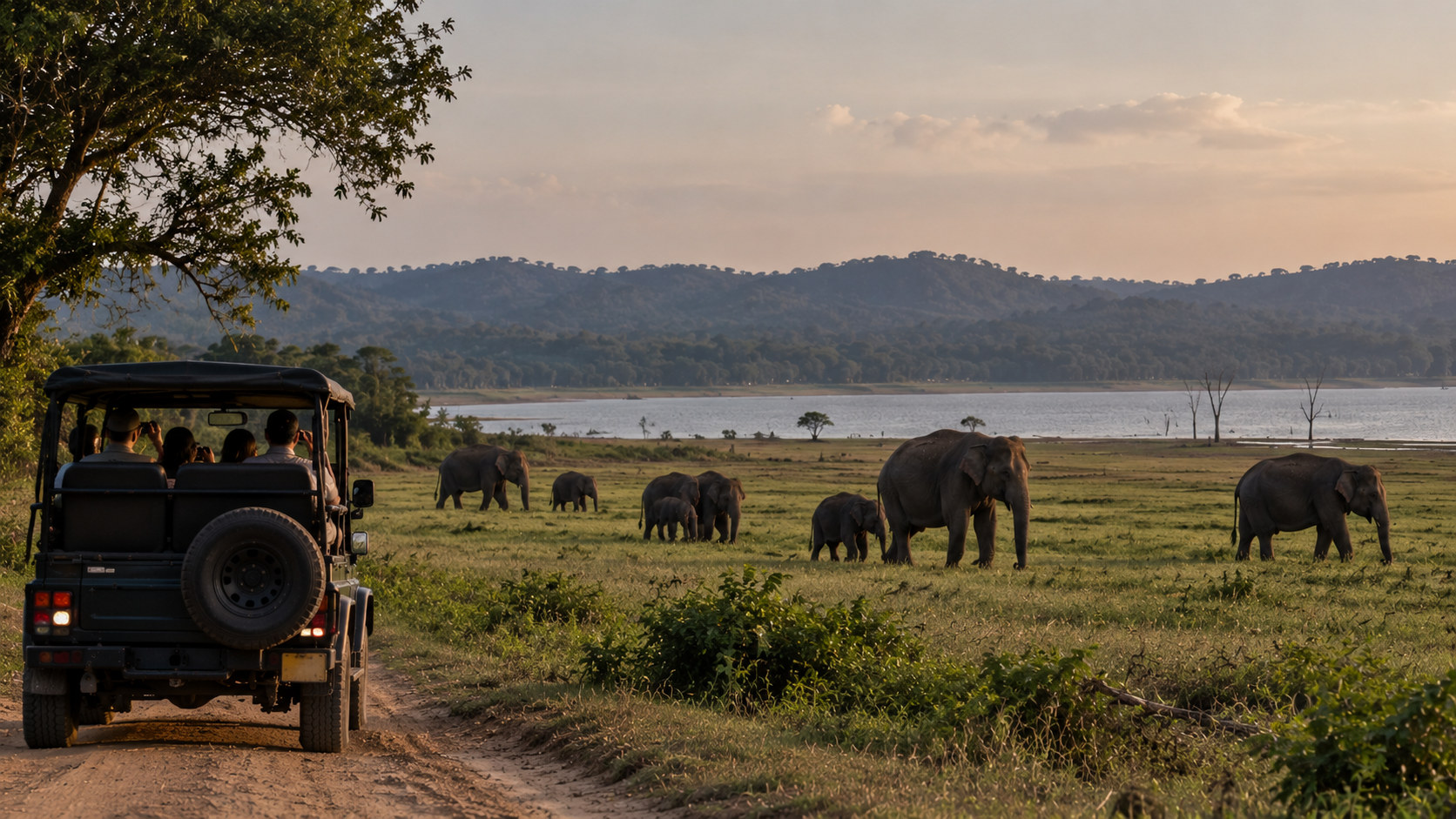
During the heat of the day, elephants may remain in the shade of the forest. As temperatures ease, they often move towards open grassland and water. An afternoon drive gives you the chance to see this activity unfold in the softer light before sunset.
A typical afternoon safari begins with a drive through dry-zone woodland and scrub. Your guide may look for movement along the tracks, fresh signs of elephants or birds gathered near water. As the landscape opens up, you may reach the reservoir margins, where herds sometimes feed in full view.
Keep in mind that wildlife does not follow a timetable. You might encounter elephants early in the drive, spend time watching one family group, or find the herds farther from the usual viewing areas.
Morning safaris can still be worthwhile, especially if you enjoy cooler temperatures, birds and the quieter atmosphere of the forest. However, if the main goal is to see the Gathering at its most impressive, prioritise the afternoon when conditions and recent sightings support that choice.
How to Plan a Minneriya National Park Safari
Stay near Habarana or Sigiriya
Habarana and Sigiriya are convenient bases for exploring Minneriya and the surrounding Cultural Triangle. Staying nearby means you can reach the park without spending much of your day travelling, leaving more time for the safari itself.
Sigiriya is particularly appealing if you want to combine wildlife with heritage. You can explore the area around the famous Sigiriya Rock Fortress, visit nearby archaeological sites or enjoy a slower morning before heading out to the park later in the day.
Habarana is another practical option, with access to several wildlife areas and routes towards Polonnaruwa. Both locations work well in a private round-tour itinerary.
Allow enough time for the drive
Do not plan your safari as a rushed stop between two long transfers. Reaching the park, arranging entry and driving through the tracks all take time, and wildlife sightings cannot be scheduled precisely.
If possible, spend at least one night in the Sigiriya or Habarana area before your safari. This gives you flexibility if the weather changes or local reports suggest that another park currently offers better elephant sightings.
Choose a responsible safari operator
A good safari is about more than finding elephants. The driver should understand animal behaviour, respect viewing distances and avoid pressuring wildlife for a closer photograph.
Ask whether the safari uses a private jeep and whether the driver can adapt the route to current conditions. A private vehicle can make the experience more comfortable for couples and families, giving you room to ask questions, pause for birdlife and enjoy sightings at your own pace.
During busy periods, several jeeps may gather around the same herd. A responsible driver will avoid blocking an elephant’s path, crowding a family group or chasing animals across the grassland.
Pack for dust, sun and changing conditions
The tracks can be dusty, particularly during dry weather. Bring drinking water, sunscreen, a hat, sunglasses and a light scarf or buff. Comfortable clothing in neutral colours is sensible, although there is no need to dress in full safari gear.
A camera with a zoom lens or a pair of binoculars can help you appreciate animals at a respectful distance. Keep your belongings secure on uneven tracks, and follow your driver’s advice about remaining inside the vehicle.
What If the Elephants Have Moved to Another Park?
One of the most useful things to understand before booking is that Minneriya is part of a wider wildlife landscape. Elephants regularly move between Minneriya, Kaudulla National Park and the forests around Hurulu.
When conditions change, Kaudulla can become the better choice. Its reservoir and surrounding grasslands offer similar opportunities to watch elephants feeding in the open. At other times, Hurulu Eco Park may be more productive, with sightings often involving smaller family groups among woodland and scrub.
This is why it is worth asking about recent sightings close to your travel dates rather than assuming Minneriya will always be the best park.
If you are travelling during July, August or September, Minneriya is a sensible starting point. If your trip falls later in the year, keep the alternative parks in mind. The aim is to see elephants in their natural habitat, not simply to tick one park off a list.
How Many Elephants Can You Expect to See?
The number varies considerably. During a strong season, visitors may see dozens or even hundreds of elephants in the wider gathering area. However, there is no fixed number that appears every afternoon, and responsible operators should never guarantee a particular count.
The experience can be memorable even when the herds are smaller. Watching a calf stay close to its mother, seeing an adult elephant pull grass with its trunk or observing animals quietly crossing the landscape offers a glimpse into their daily lives that a large headcount alone cannot provide.
It is also worth remembering that elephant sightings are only one part of the park’s wildlife. Look for waterbirds along the reservoir, deer near the woodland edges and monkeys moving through the trees. The dry-zone landscape has its own character, from dusty tracks to broad stretches of grassland beneath a bright sky.
Is the Gathering the largest elephant gathering in the world?
Minneriya is widely described as hosting one of the largest seasonal gatherings of wild Asian elephants at a single site. The exact scale varies by season, and comparisons with other wildlife locations depend on how a gathering is defined and counted.
Rather than treating a record-breaking number as a promise, think of the Gathering as a rare opportunity to witness elephants congregating naturally in a landscape shaped by centuries of water management.
How Many Wild Elephants Are There in Sri Lanka in 2026?
According to figures announced in June 2026, Sri Lanka’s latest nationwide elephant survey recorded at least 7,451 wild elephants. The survey was conducted in 2024 by the Department of Wildlife Conservation, with the results reported publicly in 2026. Read the report on the survey results.
This is a national figure, not the number living in Minneriya. Elephants range across several protected areas and other habitats, and their movements change throughout the year.
Their presence is a privilege to witness, but it also comes with responsibilities. Habitat loss and human-elephant conflict remain serious conservation challenges in Sri Lanka. Visitors can help by choosing responsible operators, following park rules and never encouraging a driver to approach or disturb an animal for a photograph.
Frequently Asked Questions
What is the best time to visit Minneriya National Park?
May to October is the broad seasonal window associated with the Elephant Gathering. July to September is often the best period for seeing large concentrations, particularly during afternoon safaris. Exact conditions vary with rainfall and reservoir levels, so check local sightings before travelling.
Where is it best to see elephants in Sri Lanka?
Minneriya is a popular choice for the seasonal Gathering. Kaudulla and Hurulu are useful alternatives when herds move or disperse. Udawalawe National Park is another well-known destination for elephant watching and may suit travellers visiting the island’s south. The best choice depends on your route, travel month and preferred safari experience.
Where is the largest elephant gathering in the world?
Minneriya is often promoted as one of the world’s largest seasonal gatherings of wild Asian elephants. The number of elephants present changes from year to year, so there is no guaranteed record-sized gathering on any particular date.
How many elephants are in Sri Lanka in 2026?
The latest figure announced in 2026 was at least 7,451 wild elephants, based on the nationwide survey conducted in 2024. This figure refers to elephants across Sri Lanka, not just those in Minneriya National Park.
Can I buy Minneriya safari tickets in advance?
Ticket arrangements can vary by operator and season. Confirm what is included in your safari booking, including the jeep, park entrance fees and any applicable taxes. If you are travelling during peak months, arranging your safari ahead of time can help you avoid unnecessary delays.
Make Your Elephant Safari Part of a Wider Sri Lanka Journey
The Minneriya Elephant Gathering is a remarkable reason to visit Sri Lanka, but it becomes even more rewarding when you give yourself time to enjoy the surrounding region. Pair a safari with Sigiriya’s ancient rock fortress, the historic city of Polonnaruwa or a relaxed stay in the Cultural Triangle, rather than trying to squeeze everything into a single day.
If you are planning a wildlife-and-heritage holiday, consider an itinerary that balances safari time with cultural discoveries and a few slower days. Gecko Travels Lanka can help you shape a private journey around your dates, interests and preferred pace, with a local chauffeur-guide and comfortable transport between destinations.
Most importantly, stay flexible. The elephants decide where they feed, when they emerge and how long they remain. Arrive with patience, respect the wildlife and allow yourself to enjoy the experience as it unfolds. That is often when a safari becomes one of the lasting memories of a Sri Lankan holiday.