
Polonnaruwa: Exploring Sri Lanka's Medieval Royal Capital
Imagine cycling along a quiet path beneath ancient trees, with enormous brick stupas rising above the greenery and stone carvings revealing stories from a kingdom that flourished centuries ago. A monkey darts across the path, birds call from the trees, and the ruins of a royal palace appear around the next bend. This is Polonnaruwa, one of Sri Lanka's most fascinating historic destinations.
Once the island's medieval royal capital, Polonnaruwa is now a remarkable archaeological landscape filled with palaces, temples, bathing pools and intricate stone sculptures. Unlike a conventional city centre, its ancient monuments are spread across a broad area, surrounded by tropical vegetation and the waters of the enormous Parakrama Samudra reservoir.
For travellers planning a cultural holiday, this Polonnaruwa travel guide explores the essential ruins, explains why cycling is such a popular way to see them, and compares Polonnaruwa with Anuradhapura to help you decide how to spend your time in Sri Lanka's Cultural Triangle.
Why Visit the Polonnaruwa Ancient City?
Polonnaruwa became Sri Lanka's principal royal capital after Anuradhapura declined in the late tenth century. It reached particular prominence during the eleventh and twelfth centuries, when powerful rulers developed impressive religious monuments, royal buildings and sophisticated irrigation systems.
King Parakramabahu I, who ruled during the twelfth century, is closely associated with the city's architectural achievements and ambitious water-management projects. The surrounding landscape reflects the importance of irrigation to an agricultural kingdom that depended on managing seasonal rainfall.
Today, the Polonnaruwa ancient city is a UNESCO World Heritage Site. Its ruins provide an extraordinary look at medieval Sri Lankan engineering, Buddhist art and royal life. You can explore the official Central Cultural Fund guide to Polonnaruwa before your visit for historical background and visitor guidance.
What makes the site particularly appealing is how its monuments fit into the natural surroundings. Ancient brickwork, granite carvings, grassy clearings and shaded paths create an atmosphere that feels quite different from a busy modern town.
It is also a destination that rewards curiosity. Even if you arrive mainly to see the famous Buddha statues, you may leave just as impressed by the scale of the ancient reservoirs or the ingenuity of the royal bathing pools.
The Must-See Attractions in Polonnaruwa
The archaeological park contains numerous monuments, and you could easily spend a full day exploring them. These are the places worth prioritising.
1. Gal Vihara Buddha Statues
For many visitors, Gal Vihara is the highlight of Polonnaruwa.
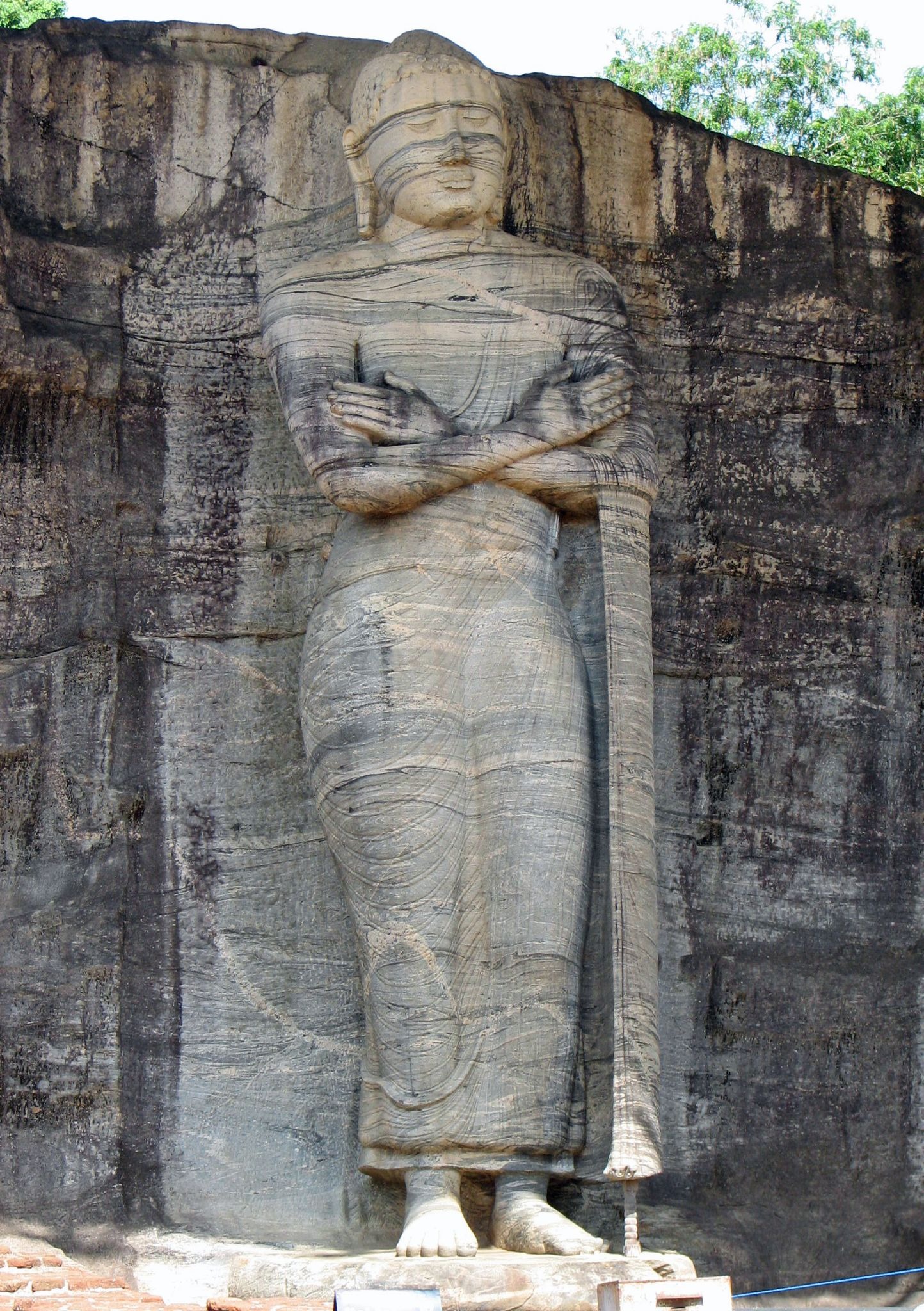
This remarkable rock sanctuary contains four Buddha images carved into a single granite outcrop. The sculptures include seated and standing figures, along with a magnificent reclining Buddha that measures approximately 14 metres in length.
The craftsmanship is extraordinary. The smooth stone surfaces, carefully rendered facial expressions and subtle details create a sense of calm that is difficult to capture in photographs.
Allow yourself time here rather than treating it as a quick photo stop. Look closely at the differences between the figures and notice how the natural rock has been incorporated into the sculptural composition.
The Gal Vihara Buddha statues remain active objects of religious reverence, so visitors should approach them respectfully. Dress modestly, follow posted instructions and never pose with your back towards a Buddha image for a photograph.
2. The Royal Palace Complex
The Royal Palace Complex offers a glimpse into the scale of medieval royal life.
The remains are associated with King Parakramabahu I's palace, which was once a substantial multi-storey structure. Today, thick brick walls and tall window openings are among the most striking surviving features.
Although the upper floors have disappeared, the remaining walls give visitors a sense of the building's original proportions. It is worth imagining the palace as part of a larger royal centre, surrounded by administrative buildings, courtyards and ceremonial spaces.
Nearby, the Council Chamber is another interesting stop. Its stone platform, carved pillars and sculpted details demonstrate the craftsmanship that extended beyond religious architecture.
Together, these ruins help explain why Polonnaruwa was more than a collection of temples. It was a functioning capital with political, administrative and religious institutions.
3. The Sacred Quadrangle
The Sacred Quadrangle, also known as Dalada Maluwa, brings several important religious monuments together within a compact area.
The most recognisable structure is the Vatadage, a circular relic house with beautifully carved stone steps, guardstones and moonstones. Its circular design and central placement make it one of the most distinctive buildings in the ancient city.
Other monuments in the complex include the Thuparama image house and the small, unusual Nissanka Latha Mandapaya, whose stone columns have distinctive curved forms.
This is an excellent area to explore slowly, particularly if you are interested in architecture and sculpture. The different structures reveal how religious spaces were designed and decorated during Polonnaruwa's medieval period.
4. Rankoth Vehera and Kiri Vehera
Polonnaruwa's large stupas provide another perspective on the city's religious importance.
Rankoth Vehera is an imposing brick stupa that dominates its surroundings. Its scale is immediately apparent as you approach it, and the open landscape around the monument allows you to appreciate its size.
Kiri Vehera, another major stupa in the archaeological complex, is also worth visiting. Its pale exterior contrasts with the surrounding greenery, creating a particularly striking scene in soft morning light.
These monuments are not simply remnants of a lost kingdom. They remain important religious places, and visitors should behave accordingly.
5. Ancient Pools and Water Gardens
Look beyond the grand monuments and you will discover details that reveal the sophistication of Polonnaruwa's builders.
The Kumara Pokuna, or royal bathing pool, is a particularly interesting example. Its stone construction and carefully arranged water features reflect the attention given to both practical needs and the design of royal spaces.
Across the wider city, reservoirs and irrigation works reveal how water shaped life in the medieval kingdom. Parakrama Samudra, the vast reservoir beside modern Polonnaruwa, is especially significant.
Its name means the Sea of Parakrama, and its scale is a reminder of the importance of water storage and agricultural planning in Sri Lanka's dry zone.
Cycling Polonnaruwa: The Best Way to Explore?
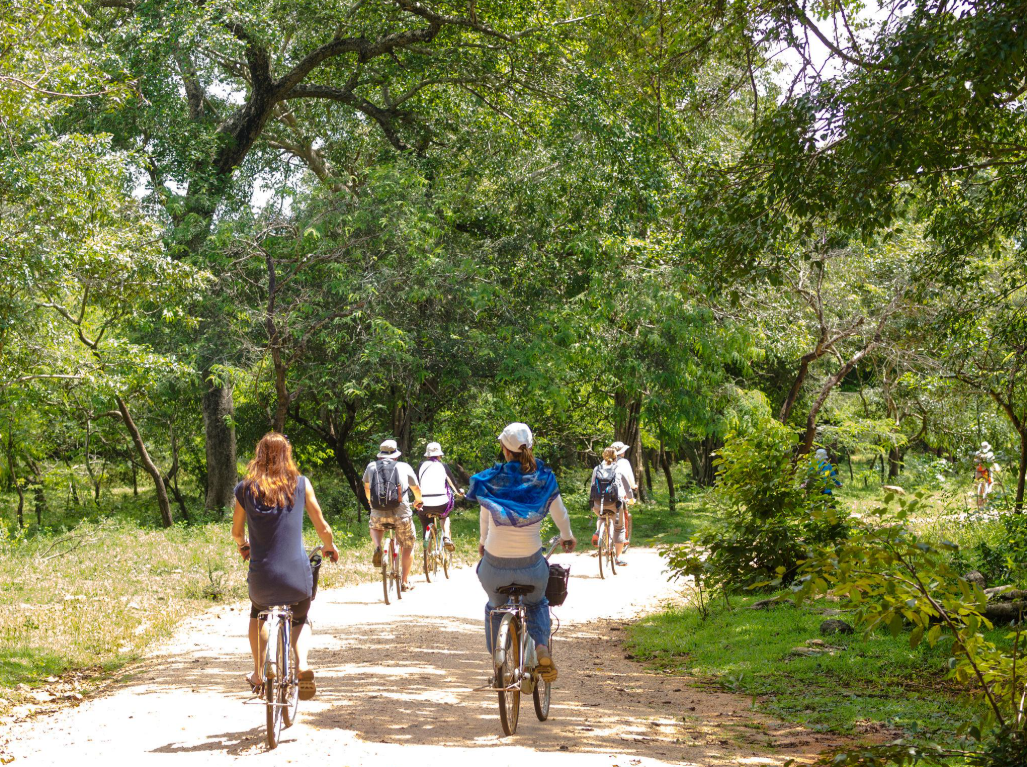
One of the most enjoyable ways to experience the archaeological park is by bicycle.
The monuments are spread across a substantial area, and cycling allows you to move between them while enjoying the open landscape. Instead of spending the entire day inside a vehicle, you can follow quiet roads, pause beneath shady trees and stop whenever an interesting ruin catches your eye.
Cycling Polonnaruwa is particularly appealing during the cooler morning hours, when the light is softer and temperatures are generally more comfortable.
Bicycles are commonly available for hire around the town and accommodation areas. Check the condition of the brakes and tyres before setting off, and confirm the rental arrangements with the provider.
A few practical tips will make the experience more enjoyable:
Start early to avoid the strongest midday heat.
Carry plenty of drinking water and apply sunscreen.
Wear comfortable clothing and shoes suitable for walking around the monuments.
Lock your bicycle where appropriate and follow signs about access restrictions.
Be prepared to leave the bicycle outside certain monuments and explore the final section on foot.
Consider a tuk-tuk or private vehicle if cycling in hot weather is uncomfortable.
Families with older children who are confident cyclists may enjoy exploring together. For younger children, older travellers or anyone who prefers to avoid the heat, a vehicle with short walks between the sites is a comfortable alternative.
Remember that bicycles are not permitted everywhere, and the ruins themselves are best explored on foot. The goal is to enjoy the journey, not to cover the entire park as quickly as possible.
Polonnaruwa Museum: Understand the Ruins Before Exploring
Before heading into the archaeological park, consider visiting the Polonnaruwa Archaeological Museum.
The museum helps bring the scattered ruins into context, with exhibits that explain the city's history, architecture, religious traditions and archaeological discoveries. Seeing the displays first can make the monuments easier to understand when you encounter them outdoors.
It is particularly useful for first-time visitors who want more than photographs of ancient buildings. You will have a better sense of how the royal capital functioned and why its structures were built in particular ways.
Check current opening arrangements when planning your day. The Central Cultural Fund provides visitor information and ticket guidance through its official heritage-site resources.
Polonnaruwa or Anuradhapura: Which Is Better for First-Time Visitors?
Both cities are essential destinations for travellers interested in Sri Lanka's history, but they offer somewhat different experiences.
Anuradhapura was an earlier capital and an important centre of Buddhist civilisation. Its archaeological landscape includes enormous stupas, ancient monasteries, sacred sites and the revered Sri Maha Bodhi tree.
Polonnaruwa is generally more compact in its main sightseeing layout, with royal buildings, image houses and stone sculptures concentrated within an accessible archaeological zone. Many visitors find it easier to understand the relationship between the palace complex, religious monuments and surrounding landscape in a single day.
Choose Polonnaruwa if you are especially interested in medieval architecture, detailed stone carving and exploring the ruins by bicycle. Gal Vihara is a particularly memorable highlight.
Choose Anuradhapura if you want to explore an older sacred capital with a strong living religious atmosphere and monumental stupas.
If your itinerary allows, visiting both provides a much richer understanding of Sri Lankan history. They represent different periods and traditions, and neither is a substitute for the other.
For travellers with limited time, Polonnaruwa is often a practical choice when staying around Sigiriya or Habarana. Anuradhapura can work better as a dedicated stop on a northern cultural route.
How Much Is Entry to Polonnaruwa?
Admission is managed by Sri Lanka's Central Cultural Fund (CCF). Ticket prices can change, so check the official CCF ticket information before your visit rather than relying on an older travel blog.
Tickets for foreign visitors are priced in US dollars, with payment in Sri Lankan rupees at the applicable rate. The CCF also offers an online ticket-ordering service, although visitors should check the current collection requirements and conditions before travelling.
Allow enough time to visit the museum and the archaeological park on the same day. Confirm whether the ticket terms permit re-entry before leaving the site for lunch or returning to your accommodation.
It is sensible to budget separately for bicycle hire, transport, refreshments and any additional guiding services.
Best Time to Visit Polonnaruwa
Polonnaruwa lies in Sri Lanka's dry zone, where daytime temperatures can be high throughout much of the year. The most comfortable sightseeing hours are usually early morning and late afternoon, although some monuments are best visited while daylight is strong enough to appreciate their details.
The broader dry season, often from around May to September, can be suitable for exploring the archaeological park, but hot conditions are common. The northeast monsoon, generally affecting the region from around October to January, can bring heavier rainfall and occasional disruption.
Weather patterns vary, so do not assume every day in the dry season will be rain-free or that every wet-season day will be unsuitable.
If you plan to cycle, begin early, take regular breaks and avoid underestimating the heat. A hat, sunscreen and water are essential.
The surrounding region also offers opportunities for wildlife viewing. Minneriya and Kaudulla national parks are known for wild elephants, with sightings and seasonal elephant gatherings depending on rainfall, water availability and local conditions. If you hope to combine history with a safari, leave enough time for a separate excursion rather than squeezing everything into one long day.
How Long Should You Spend in Polonnaruwa?
For most travellers, one full day is enough to explore the main archaeological sites at a comfortable pace.
Arriving early allows time for the museum, Royal Palace Complex, Sacred Quadrangle, Gal Vihara and several of the larger stupas. You can explore by bicycle if the weather is suitable or arrange transport between the main monuments.
Two nights in the area make sense if you also want to visit nearby wildlife parks, explore village life or enjoy a slower cultural itinerary.
Polonnaruwa is often combined with Sigiriya and Dambulla, making it a natural part of a Cultural Triangle journey. If you are planning a longer route, consider the relevant Sri Lanka cultural tours to see how the ancient capitals and other heritage destinations can fit together.
Practical Tips for Visiting the Ancient City
A little preparation makes a significant difference to your day.
Dress respectfully: Some monuments are active religious sites. Cover your shoulders and knees where required, and remove footwear when instructed.
Be careful with photographs: Never pose disrespectfully in front of Buddha images. Follow the posted rules and instructions from site staff.
Carry water: The archaeological area is exposed in places, and shade is not always available.
Use comfortable footwear: You will be walking across uneven paths and around stone structures.
Protect yourself from the sun: Bring sunscreen, a hat and sunglasses.
Allow time for breaks: A full day among the ruins can be tiring, particularly during hotter months.
Consider a knowledgeable guide: Historical context can transform a collection of ruins into a more meaningful experience.
Respect the site: Do not climb on monuments, touch fragile carvings unnecessarily or leave rubbish behind.
If you are travelling with family, plan a route around the children's energy levels. A few well-chosen monuments, a shaded break and a relaxed lunch may be more enjoyable than trying to see everything.
Conclusion: Discover Polonnaruwa at Your Own Pace
Polonnaruwa offers a remarkable window into Sri Lanka's medieval past, from the artistry of the Gal Vihara Buddha statues to the scale of the royal palace and ancient irrigation systems. Whether you explore by bicycle or with a private vehicle, give yourself time to appreciate the details rather than rushing from one monument to another.
If you are planning a wider Sri Lankan holiday, Gecko Travels Lanka can help incorporate Polonnaruwa into a tailor-made journey that combines ancient heritage with Sigiriya, wildlife safaris and other destinations at a pace that suits you.