
Sigiriya Rock Fortress: Everything You Need to Know Before You Climb
There is something slightly surreal about approaching Sigiriya for the first time. One moment you are driving through the flat, green landscape of Sri Lanka’s Cultural Triangle; the next, a huge rock monolith rises above the trees, seemingly too steep and too enormous to have once been a royal stronghold.
Climbing it is one of those Sri Lankan travel experiences that sounds more intimidating than it actually is. With the right timing, sensible footwear, enough water and a realistic idea of what lies ahead, the ascent is manageable for many reasonably active travellers. This Sigiriya Rock Fortress guide covers what you need to know before you arrive, from opening hours and tickets to the climb itself, the history behind the ruins and whether Pidurangala might suit you better.
The key is not to treat Sigiriya as simply a staircase leading to a viewpoint. The gardens, ancient frescoes, Mirror Wall, Lion's Paw Terrace and summit ruins are all part of the experience. Give yourself enough time, start early and the climb becomes much more than a workout it becomes a journey through one of Sri Lanka's most remarkable archaeological sites.
What Makes Sigiriya Rock Fortress Special?
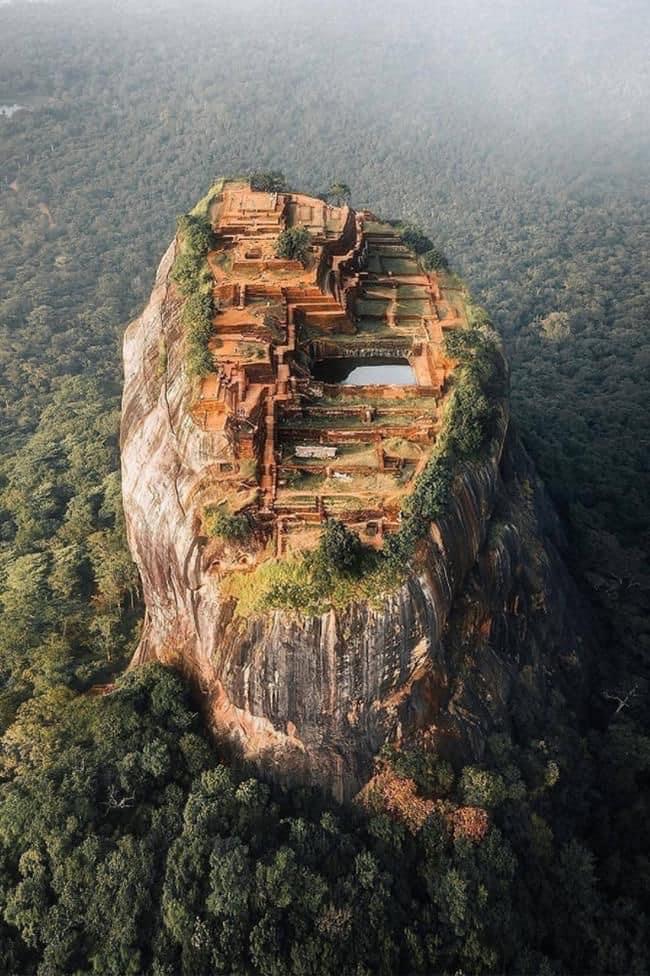
Sigiriya, also known as Lion Rock, is a UNESCO World Heritage Site in Sri Lanka's Matale District. The granite monolith rises dramatically above the surrounding plain, with archaeological remains extending across the rock and the gardens and fortifications at its base. UNESCO describes the rock as standing about 180 metres above the surrounding landscape.
The most famous chapter of its history dates to the 5th century AD, when King Kassapa I established his capital here. The site combined a royal palace on the summit with defensive walls, moats, water gardens and carefully planned urban spaces below.
What makes Sigiriya particularly fascinating is the sophistication of the whole complex. This was not simply a palace built on top of a giant rock. Its designers incorporated hydraulic systems, landscaped gardens, architecture, paintings and defensive engineering into one extraordinary setting. UNESCO considers it one of the best-preserved examples of ancient urban planning in the region.
Today, visitors approach through the extensive gardens before beginning the climb towards the rock's upper levels.
Sigiriya Opening Hours and Tickets
One of the first things to check before visiting is the Sigiriya opening hours.
The Central Cultural Fund currently lists Sigiriya Rock Fortress as open from 7:00 a.m. to 5:00 p.m., with the heritage-site ticket counter operating during those hours.
For current foreign visitor pricing, the Central Cultural Fund's latest published price list shows a full Sigiriya ticket at US$35, with the equivalent local-currency amount updated according to its exchange rate. The CCF notes that prices can change, so check the official ticketing information close to your travel date.
Tickets can also be ordered online through the Central Cultural Fund's e-ticketing system. The official system explains that an online order can then be used to collect the ticket at the relevant heritage-site counter.
If you are travelling during a busy holiday period, having your ticket arrangements sorted in advance can make the morning less stressful.
How Much Time Should You Allow?
Do not plan Sigiriya as a one-hour stop.
For most visitors, allow around 3 to 4 hours for the complete experience. That gives you time to walk through the gardens, climb at your own pace, stop at the major archaeological features and spend some time at the summit.
If you are travelling with young children, older family members or anyone who needs regular breaks, allow longer.
What Is the Best Time to Climb Sigiriya?
The biggest favour you can do yourself is to start early.
The gates open at 7:00 a.m., and an early start means you can tackle the most physically demanding part of the visit before the tropical heat becomes intense. Gecko Travels Lanka also recommends an early-morning climb to avoid the heat and larger crowds.
Morning light can also be beautiful around the gardens and rock, making this a particularly rewarding time for photographers.
A practical target is to arrive shortly before or around opening time, particularly if you are visiting during a warmer period.
Late afternoon can be attractive for the softer light, but remember that you need enough time to complete the ascent and descent before the site closes.
Climbing Sigiriya: What Should You Expect?
This is where many first-time visitors have questions.
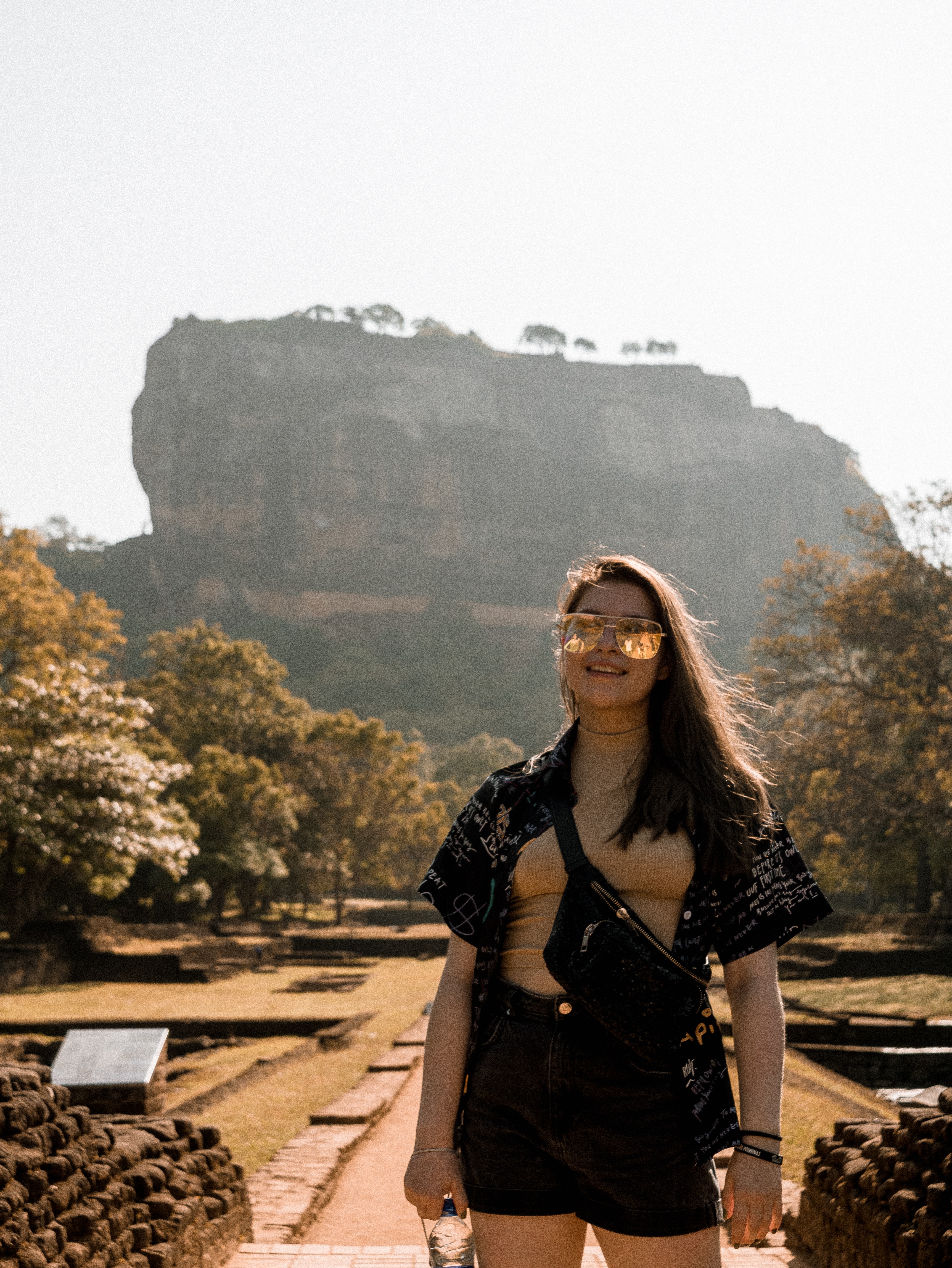
The climb is often described as involving around 1,200 steps, although the exact number varies depending on how the route is counted. What matters more than the number is that the ascent is broken into different sections rather than being one continuous staircase.
You begin at ground level and walk through the landscaped gardens before reaching the base of the rock. From there, the route gradually becomes steeper.
Along the way, you encounter the famous frescoes, the Mirror Wall and the Lion's Paw Terrace before the final ascent towards the summit.
Is Sigiriya Difficult to Climb?
For a reasonably active traveller, Sigiriya is generally manageable, but it should not be mistaken for an effortless sightseeing walk.
The biggest challenge is usually the combination of stairs, heat and exposure rather than technical climbing. There are metal staircases and railings on much of the upper route, but some sections can feel steep, particularly if you are uncomfortable with heights.
You do not need specialist hiking equipment.
Good-grip walking shoes or trainers, lightweight clothing and a hat are more useful than anything elaborate.
If you have significant mobility limitations, vertigo or concerns about climbing several hundred stairs, discuss the route honestly with your travel companions or guide before committing to the ascent.
Climbing Sigiriya Tips for a More Comfortable Visit
A few simple climbing Sigiriya tips can make a noticeable difference.
Carry water. The heat can catch you out, particularly once you are exposed on the upper rock.
Wear proper footwear. Comfortable shoes with a reliable grip are preferable to sandals or smooth-soled fashion shoes.
Start early. This is perhaps the single most useful tip. Cooler temperatures make the climb considerably more pleasant.
Take breaks. There is no prize for reaching the top quickly. Pause when you need to, especially before the steeper sections.
Protect yourself from the sun. A hat, sunscreen and breathable clothing are worthwhile.
Keep your hands free. A small backpack is easier to manage than a large day bag.
Be careful around exposed sections. Follow the barriers and instructions provided at the site rather than moving towards an edge for a photograph.
Respect the archaeological site. Do not touch the ancient paintings or carve, scratch or write on historic surfaces.
The climb becomes much more enjoyable when you stop worrying about how quickly you are moving.
What Will You See on the Way Up?
The route itself is one of the best parts of Sigiriya.
At the lower level, the water gardens reveal the site's remarkable planning. Pools, channels and geometric garden spaces demonstrate the sophisticated approach to landscape design used centuries ago.
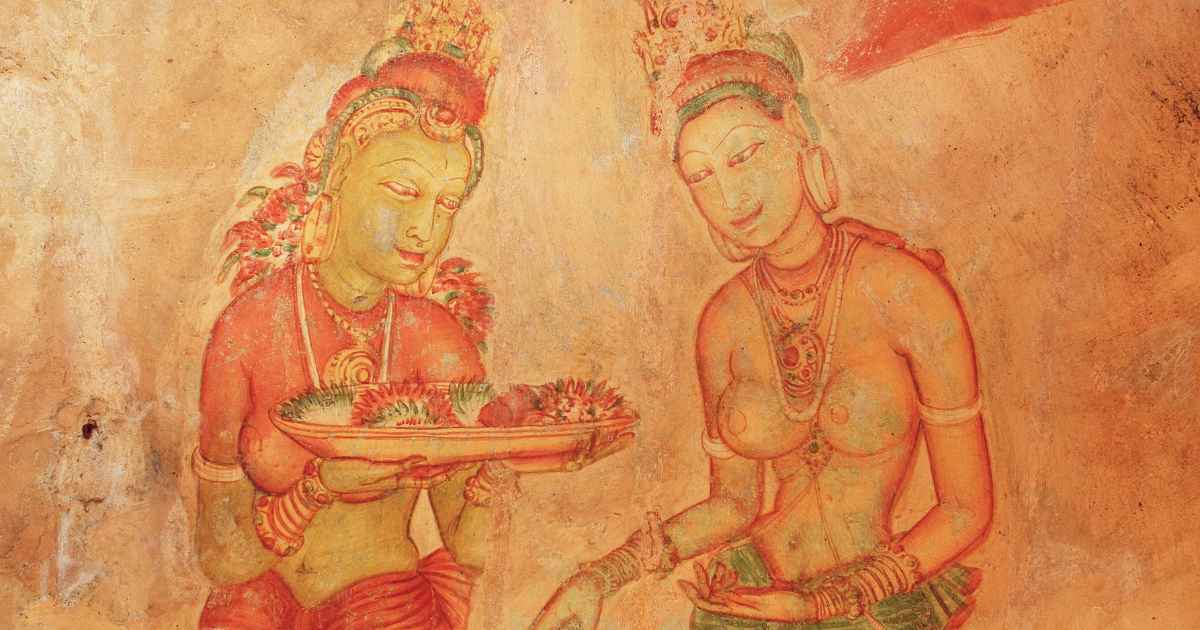
Higher up are the famous Sigiriya frescoes, painted on the western face of the rock. UNESCO identifies these wall paintings as among the site's outstanding features and notes that they date to the 5th century AD.
You then reach the Mirror Wall, which is particularly interesting because ancient visitors left inscriptions and poems on its polished surface. These writings provide a glimpse into how earlier visitors experienced Sigiriya.
Further up, the enormous Lion's Paws mark the entrance to the final section of the ascent. The original entrance was designed around a colossal lion figure; today, the surviving paws give you an impressive sense of its scale.
Finally, you reach the summit.
What Can You See from the Top of Sigiriya?
The summit is where the physical effort starts to make sense.
The remains of the ancient royal complex sit among exposed rock, foundations and other archaeological features, while the surrounding landscape stretches in every direction.
From up here, the flat Cultural Triangle landscape looks completely different from ground level. Forest, villages, lakes and distant hills form a broad green panorama.
Give yourself time at the top rather than immediately starting the descent.
There is something wonderfully quiet about standing among the ruins and looking across a landscape that has changed surprisingly little in its broad natural character over the centuries.
Sigiriya vs Pidurangala: Which Should You Climb?
The Sigiriya vs Pidurangala question comes up constantly when planning a trip to the area, but the two experiences are actually quite different.
Sigiriya Rock Fortress is the choice if you want the archaeological experience: the ancient gardens, frescoes, Mirror Wall, Lion's Paws and summit ruins. You are climbing the historic monument itself.
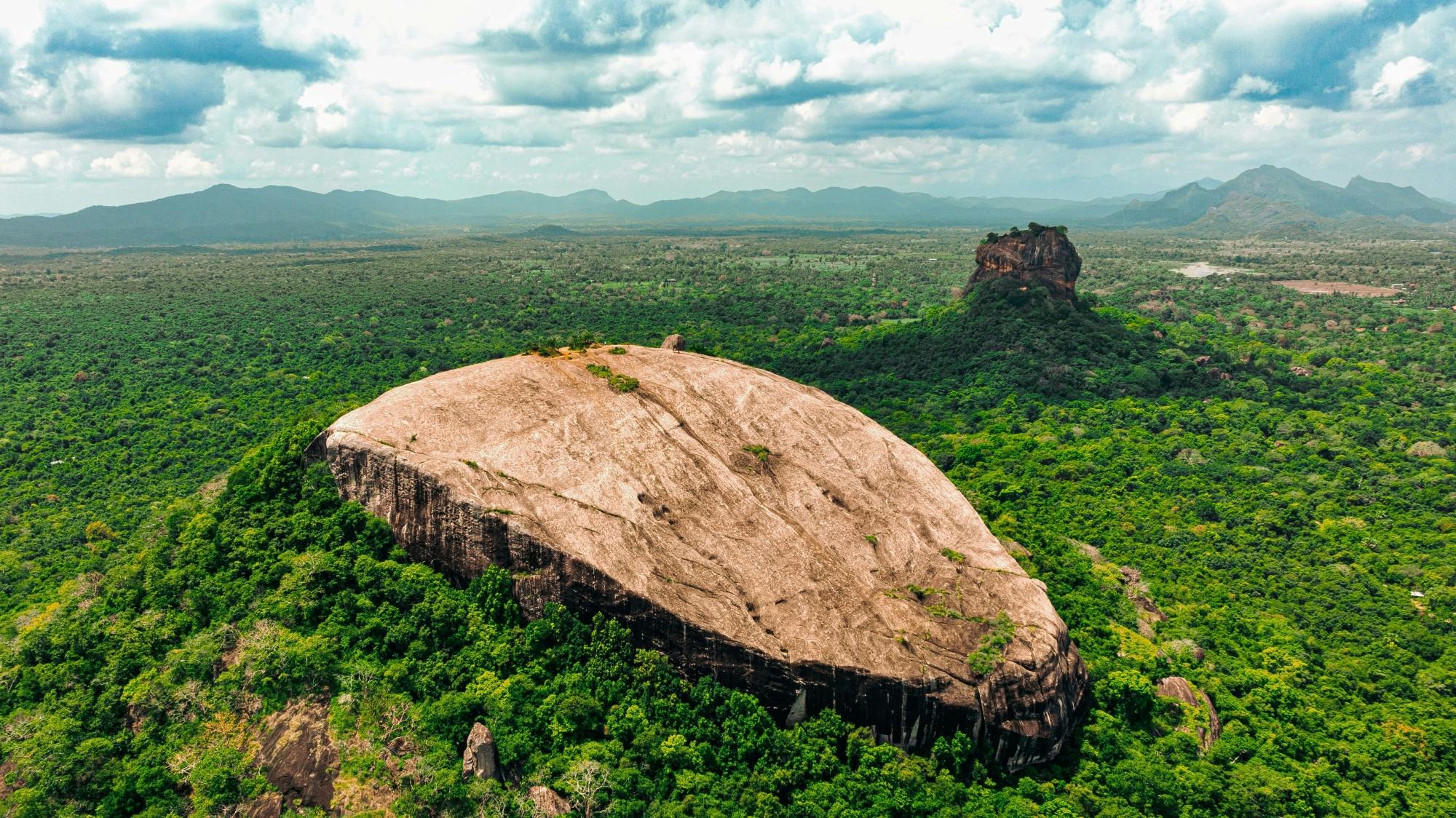
Pidurangala Rock, on the other hand, is famous for its view towards Sigiriya. It has its own Buddhist heritage and archaeological significance, and Sri Lanka Tourism notes that the site was an important Buddhist monastery associated with the period of King Kassapa.
The classic Pidurangala experience is an early-morning hike for a view of Sigiriya rising dramatically across the landscape.
So the choice depends on what you want from the experience.
Choose Sigiriya for history, architecture and the fortress itself.
Choose Pidurangala for a more hiking-focused experience and the iconic external view of Sigiriya.
If your fitness, schedule and budget allow, doing both can provide two completely different perspectives of the same landscape.
When Is the Best Season to Visit Sigiriya?
Sigiriya can be visited throughout the year, but weather matters because much of the climb is exposed.
The central Cultural Triangle can become hot during the middle of the day, making early starts especially valuable. Gecko Travels Lanka currently highlights January to April and July to September as particularly favourable periods for visiting Sigiriya.
Rain is not necessarily a reason to cancel a Sri Lanka trip, but wet conditions can make outdoor sightseeing less comfortable and some surfaces more slippery.
If your itinerary is flexible, build some breathing room around your Sigiriya visit rather than scheduling it immediately before a long transfer.
How to Fit Sigiriya Into a Sri Lanka Itinerary
Sigiriya works particularly well as part of a Cultural Triangle itinerary.
Many travellers stay around Sigiriya, Habarana or Dambulla and visit the rock in the morning before continuing to another attraction.
You can combine it with the Dambulla Cave Temple, explore the ancient city of Polonnaruwa, or add a wildlife safari in Minneriya National Park depending on the season and your interests.
For a short Sri Lanka holiday, Gecko Travels Lanka's 5-day Sri Lanka highlights itinerary combines Sigiriya with Dambulla, Kandy and the central highlands. For a longer journey, the 9-day Sri Lanka heritage, wildlife and beach tour combines Sigiriya with Kandy, tea country, Yala and the southern coast.
The advantage of placing Sigiriya early in the day is that you can then spend the afternoon somewhere less physically demanding.
A Simple Pre-Climb Checklist
Before leaving for Sigiriya, make sure you have:
Comfortable walking shoes with good grip
At least one bottle of drinking water
Sunscreen and a hat
Lightweight, breathable clothing
A small backpack
Your ticket or booking details
A camera or phone with enough battery
Enough time for the climb rather than a rushed schedule
Most importantly, check the current Sigiriya opening hours and ticket information before your visit because operational details and prices can change.
Frequently Asked Questions
How long does it take to climb Sigiriya Rock Fortress?
Most visitors should allow around 1.5 to 2 hours for the ascent, descent and stops along the route, with another 1–2 hours for the gardens and archaeological areas. The exact time depends on your fitness, pace, crowds and how often you stop.
Is Sigiriya Rock difficult to climb?
Sigiriya is physically demanding but manageable for many reasonably active travellers. The main challenges are the number of stairs, heat and some exposed sections rather than technical climbing.
How much does it cost to enter Sigiriya Rock Fortress?
The Central Cultural Fund's latest published price lists the full foreign visitor ticket at US$35, with prices converted into LKR using its current exchange rate. Always check the CCF's official pricing page before travelling because prices can change.
What is special about Sigiriya Rock?
Sigiriya combines a 5th-century royal citadel with sophisticated water gardens, ancient frescoes, the Mirror Wall, monumental Lion's Paws and extensive archaeological remains. The site was inscribed as a UNESCO World Heritage Site in 1982.
Is Pidurangala better than Sigiriya?
They offer different experiences. Sigiriya provides access to the ancient fortress, gardens and summit ruins, while Pidurangala is known for its hike and views towards Sigiriya. Travellers with enough time can consider visiting both.
Final Thoughts
Sigiriya is one of those places where a little preparation genuinely improves the experience. Arrive early, bring water, wear sensible shoes and allow enough time to explore rather than treating the climb as something to finish as quickly as possible.
The reward is not just the view from the top. It is the gradual discovery of gardens, paintings, ancient inscriptions, monumental stonework and the remains of a royal city as you climb higher.
If Sigiriya is part of your wider Sri Lanka holiday, Gecko Travels Lanka can build the visit around your preferred pace and combine it with cultural sites, wildlife, tea country or the coast. A little flexibility can turn a challenging morning into one of the most memorable experiences of your trip.